Japan · 20 min · Fish · Starter · For beginners
Sashimi Sarada
In German: Sashimi-Salat · In English: Sashimi salad with ponzu dressing
For 2 servings · US units
Thin slices of white fish on crisp lettuce with myoga and a light soy-vinegar dressing
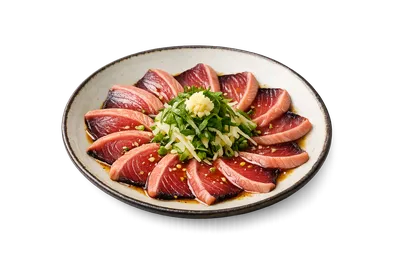
Sashimi sarada puts raw fish and salad on the same plate: thin slices of sea bream or another white fish sit on lettuce leaves crisped in cold water, with myoga and a dressing of soy sauce, rice vinegar and olive oil. It suits spring and summer, when you're after something fresh, and it's on the table in twenty minutes.
Ingredients
- 4¼ ozsashimi-grade white fishe.g. sea bream (tai), skinned if needed, thinly sliced on the diagonal
- 4Lettuceleaves, torn into bite-size pieces, crisped in cold water
- 1cut into fine strips or slices, soaked in waterThe flower buds of a Japanese ginger species, finely shredded and usually eaten raw: crisp and fresh, mildly pungent with a floral scent.Substitute: There is no true substitute, because the floral scent is unique. Finely shredded young ginger with a little spring onion or shallot catches the freshness and gentle bite, but the dish loses its characteristic floral note.Read more
- 1 tbspsoy saucefor the dressing; light soy sauce or dashi soy sauce
- 1 tbspfor the dressingMild, pale vinegar made from rice, less sharp than wine vinegar.Substitute: White wine vinegar or mild cider vinegar, thinned with a little water and softened with a pinch of sugar, comes close; the result tastes slightly sharper and fruitier.Read more
- 1 tbspolive oilfor the dressing
- 1 tspsugarfor the dressing
- saltto lightly season the fish
- 2 tbspas dressing base instead of soy sauce and vinegar (optional)A thin Japanese seasoning sauce of citrus juice, soy sauce, vinegar and dashi, tart and salty with a fresh citrus aroma.Substitute: Soy sauce with roughly the same amount of lemon or lime juice, a splash of rice vinegar and a little mirin comes close in taste; a touch of orange or grapefruit juice brings the aroma nearer to Japanese citrus. What is missing is the depth of dashi and the distinct fragrance of yuzu or sudachi, so the mix tastes flatter and more sharply sour.Read more
- 1cucumberpeeled, cut into fine julienne, as a bed for the fish (optional)
- 1¾ ozcut into very fine shreds (tsuma) (optional)A large, mild white radish from East Asia, crisp and juicy raw, soft and broth-absorbing when cooked.Substitute: White radish is a good substitute, slightly sharper when raw; for simmered dishes and soups, turnip also works, though it is sweeter and less juicy.Read more
- 5cut into fine strips (optional)Aromatic leaves of a Japanese herb in the mint family, fresh and spicy, somewhere between mint, basil and anise.Substitute: There is no true substitute, because the aroma is unique. A mix of fresh mint and basil captures the freshness but not the spicy, anise-like note; Korean perilla leaves come closer but taste coarser and more sesame-like, and are tougher in texture.Read more
- 1 bunchmizunacut into approx. 5 cm lengths, soaked in water (optional)
- 1 clovegarlicsliced and fried into chips in oil; use the oil for the dressing (optional)
- 1 ozwhite sesame pastefor a creamy sesame dressing (optional)
- ⅓ ozpine nutsdry-toasted, for sprinkling (optional)
Method
- Prepare the salad and vegetablesTear the lettuce leaves into bite-size pieces and cut the myoga into fine strips or slices. If you're using them, peel the cucumber and cut it into fine julienne, cut the daikon into very fine shreds and cut the mizuna into lengths of about 5 cm. Put everything in cold water and let it crisp up.
- Make garlic chips and toast nutsFor the garlic version, slice the clove and fry it slowly in a little oil until golden and crisp. Lift out the chips and keep the oil for the dressing. If you like, toast the pine nuts in a dry pan until they smell nutty.
- Slice the fishSkin the fish if needed, then use a sharp knife to cut it on the diagonal into thin slices.
- Mix the dressingFor the dressing, stir together the soy sauce, rice vinegar, olive oil and sugar until the sugar has dissolved. You can use ponzu as the base instead of soy sauce and vinegar, swap the garlic oil in for the olive oil, or stir in white sesame paste for a creamy dressing.
- Arrange the vegetables on platesDrain the lettuce and vegetables well and arrange them loosely on plates. The cucumber julienne makes a good bed for the fish.
- Add the fish and salt lightlyLay the fish slices on top of or next to the vegetables and season them lightly with salt.
- Dress, garnish and serveSpoon the dressing over the salad or serve it on the side. Finish with the shiso strips, garlic chips or pine nuts and serve straight away.
Tips and variations
For a creamy version, make the dressing with sesame paste and scatter toasted pine nuts and flaked almonds over fish laid on the cucumber julienne. For something bolder, go with garlic chips, the garlic oil as the base of the dressing, spring onions and mizuna. A topping of shiso, myoga and cress with a chili oil and lemon dressing is fresh and punchy. You can also marinate the fish in the ponzu dressing beforehand and serve it with chicory and radicchio, or chop it roughly and toss it with daikon shreds and whichever dressing you like. Keep the plates and vegetables well chilled so everything stays nice and crisp.
Allergens
Contains: Fish, Cereals containing gluten, Soybeans
May contain if you use the optional ingredients: Tree nuts, Sesame
Not every ingredient in this recipe has been checked, so nothing is promised as free from.
These notes follow from this recipe's ingredient list. Ready-made products and brands may contain further allergens — please check the packaging yourself.
Something not right?
This recipe was put together from independent sources and checked before publishing. Even so, a mistake can slip through — an amount that does not add up, a step that does not work as written. If you spot something, write to us: we will look into it and put it right.