Japan · 30 min · Meat · Main course · For beginners
Butadon
In German: Schweinefleisch-Reisschale nach Kinpira-Art · In English: Kinpira-style pork rice bowl
For 4 servings · US units
Glazed pork over hot rice, on the table in half an hour
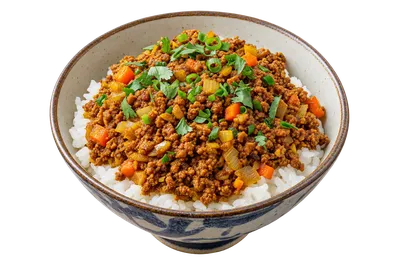
Butadon is a rice bowl topped with pork that simmers in soy sauce, mirin, sake, sugar and vinegar until it glazes and shines. The pan juices soak down into the rice underneath, which turns a bowl into a full meal and explains why this shows up on so many weeknight tables. It works all year round, takes thirty minutes and needs little beyond what you already have in the kitchen.
Butadon on video
All 9 steps in 2:39 minutes, with subtitles, to cook along on your phone.
Ingredients
- 12⅓ ozPorkthinly sliced belly or offcuts, cut into bite-size pieces
- 1⅓ lbricecooked, as the base in the bowl
- 2 tbspsoy saucefor the seasoning sauce
- 3 tbspfor the seasoning sauceSweet Japanese rice wine for cooking that gives sauces and glazes a mild sweetness and shine.Substitute: Sake or dry sherry with some sugar, about one teaspoon per tablespoon, comes close; sweetness and shine are roughly right, but the rounded, slightly malty depth of mirin is missing.Read more
- 3 tbspfor the seasoning sauceJapanese rice wine, used in cooking mainly to round out flavours, tame fishy notes and add umami.Substitute: Dry sherry or Chinese Shaoxing wine come closest but bring their own stronger flavour; mirin is not a substitute because it is distinctly sweet.Read more
- 2 tbspsugarsweetens the sauce
- 2 tbspadds acidity to the sauceA mild, faintly sweet vinegar made from rice, much gentler than wine vinegar.Substitute: Light cider vinegar or white wine vinegar, thinned with a little water and rounded off with a pinch of sugar, comes close. It tastes slightly fruitier and sharper, and the difference shows most in sushi rice and delicate dressings.Read more
- 2 tbspOilfor frying
- 1 tbspinstead of neutral oil for frying (optional)Oil pressed from toasted sesame seeds, dark and strongly nutty, used by the drop as a seasoning.Substitute: There is no equivalent substitute; at a pinch, steep freshly toasted, crushed sesame seeds in a little neutral oil, which gives the roasted aroma only faintly and without the depth of the oil.Read more
- 2¾ ozfinely julienned, for the kinpira character (optional)The long, slender root of the greater burdock plant, brown outside and pale inside, with an earthy, faintly sweet flavour and a firm, fibrous texture.Substitute: The closest match is salsify, which has a similar earthy taste, browns just as quickly and has a comparable shape, but is softer and milder and cooks faster. Parsnip or parsley root capture the sweetness but not the fibrous bite or the astringent, woodsy flavour, so the dish turns out softer and sweeter.Read more
- 5¼ ozcarrotfinely julienned (optional)
- 3½ ozcut into quarter slices (optional)The thickened underwater stem of the lotus plant, run through with air channels that give every slice a flower-like pattern. Crisp, mild and faintly sweet.Substitute: There is no real substitute, since neither the pattern of holes nor the faintly starchy flavour is found elsewhere. Where only the bite matters, canned water chestnuts or jicama give a similar crunch, but they are juicier and sweeter and do not turn sticky with long braising.Read more
- 1 tbspin the seasoning sauce (optional)A fermented paste of soybeans, salt and often rice or barley: salty, savoury and deep in flavour.Substitute: Soy sauce supplies salt and savouriness, but neither the body nor the rounded, faintly sweet depth of the paste; it will do at a pinch in soups and marinades, but not in glazes and dressings, where miso provides body. Light and dark miso can stand in for each other if you use the dark one more sparingly.Read more
- 1 tbsphoneysweetens the sauce instead of sugar (optional)
- 1 clovegarlichalf minced, half sliced (optional)
- 3½ ozcut into strips, fried along (optional)A large mushroom with a thick, firm white stem and a small cap, meaty and mildly nutty when cooked.Substitute: Oyster mushrooms taste similar but are softer and thinner, so the firm, meaty texture is lost; cremini mushrooms are firmer but taste earthier and release more water.Read more
- 7 ozLettucebriefly stir-fried along (optional)
- 2 tbspcoat the meat, thickens the sauce (optional)Fine white starch powder from potatoes, used in Japan as katakuriko for thickening and coating.Substitute: Tapioca starch comes closest. Cornstarch also thickens, but gives cloudier, less glossy sauces and fried coatings that are less crisp.Read more
- 1 bunchfinely shredded, as topping (optional)Aromatic leaves of a Japanese herb in the mint family, fresh and spicy, somewhere between mint, basil and anise.Substitute: There is no true substitute, because the aroma is unique. A mix of fresh mint and basil captures the freshness but not the spicy, anise-like note; Korean perilla leaves come closer but taste coarser and more sesame-like, and are tougher in texture.Read more
- spring onionsliced into rings, as topping (optional)
- 4as topping on the bowl (optional)An egg cooked slowly at just under 70 °C, leaving the yolk creamy and the white only half set.Substitute: A poached or very soft-boiled egg comes closest, though the white is then firm and the yolk runny rather than creamy, so it blends less evenly into the dish.Read more
Method
- Cut the porkCut the pork (thinly sliced belly or offcuts) into bite-size pieces.
- Prepare the toppingsPrepare the toppings: if you like, slice spring onion into thin rings and have the onsen eggs ready.
- Mix the seasoning sauceStir the soy sauce, mirin, sake, sugar and vinegar together in a bowl until the sugar has dissolved.
- Optionally coat in starchIf you prefer a thicker sauce, toss the pork in potato starch now and tap off the excess.
- Sear the porkHeat the oil, or sesame oil instead, in a pan and fry the pork over high heat until it has colour all over.
- Optionally fry vegetablesIf you want to cook vegetables with the pork, add them now and fry them over medium heat until tender but still with some bite.
- Glaze with the saucePour in the seasoning sauce and let everything reduce for a few minutes, until the meat is glazed and the sauce clings to a spoon like syrup.
- Assemble the rice bowlsDivide the cooked rice between four bowls, spoon the pork on top and pour the remaining pan juices over it.
- Top and serveFinish, if you like, with spring onion rings or an onsen egg and serve straight away.
Tips and variations
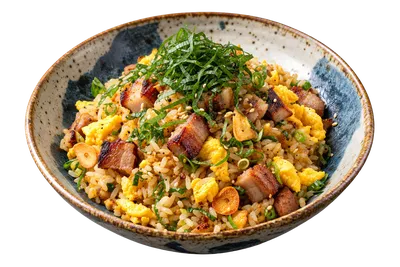
For the kinpira version, fry burdock root (gobo), carrot and lotus root along with the pork, season with miso and honey instead of sugar, and top the bowl with finely shredded shiso leaves; cut the burdock root and carrot into fine julienne and the lotus root into quarter slices. Another version fries the starch-coated pork together with lettuce. You can skip the pan altogether and use the rice cooker: wrap the seasoned pork in foil, lay it on the rice and let it cook with it. A bolder version fries the rice in the pan first with garlic and soy sauce, then fries king oyster mushroom cut into strips together with the pork and spoons both over the rice. For frying, you can use oil or sesame oil; the sesame oil brings noticeably more aroma. Fill the bowls straight from the pan so the hot juices run through the rice.
Allergens
Contains: Cereals containing gluten, Soybeans
May contain if you use the optional ingredients: Eggs, Sesame, Molluscs
These notes follow from this recipe's ingredient list. Ready-made products and brands may contain further allergens — please check the packaging yourself.
Something not right?
This recipe was put together from independent sources and checked before publishing. Even so, a mistake can slip through — an amount that does not add up, a step that does not work as written. If you spot something, write to us: we will look into it and put it right.