Japan · 30 min · Vegan · Main course · For beginners
Yaki Udon
In German: Gebratene Udon · In English: Stir-fried udon noodles
For 4 servings · US units
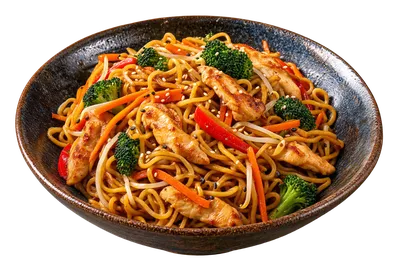
Thick wheat noodles from the wok with mushrooms, pak choi and soy sauce
Yaki Udon are fried udon noodles: thick, soft and absorbent enough to soak up every drop of soy sauce. Around them goes vegetable that only meets the hot wok briefly and stays crisp — carrot, bell pepper, pak choi, mushrooms. Half an hour and you have a full meal on the table, an everyday dish that works in any season.
Ingredients
- 1⅛ lbpre-cooked or dried, cooked briefly and drained before fryingThick, soft Japanese wheat noodles with an elastic bite, usually served in broth or briefly stir-fried.Substitute: Thick Chinese wheat noodles come closest; spaghetti or linguine will do in a broth at a pinch, but they are thinner and firmer, so the soft, elastic fullness of udon is lost.Read more
- 5 tbspsoy saucefor seasoning the noodles
- 3 tbspfor stir-frying in the wokOil pressed from toasted sesame seeds, dark and strongly nutty, used by the drop as a seasoning.Substitute: There is no equivalent substitute; at a pinch, steep freshly toasted, crushed sesame seeds in a little neutral oil, which gives the roasted aroma only faintly and without the depth of the oil.Read more
- 1 bunchspring onionsliced into rings, keep green parts for sprinkling
- 2carrotpeeled, thinly sliced or cut into sticks
- 8¾ ozMushroomsking oyster mushrooms or button mushrooms, cleaned and halved
- 1 tbspsesame seedstoasted, for sprinkling
- 1onioncut into chunks or finely chopped
- 1 tbspfor heatA hot, slightly sweet chili sauce with garlic and a little vinegar, smooth and thick.Substitute: Sambal oelek with a pinch of sugar and a little garlic comes close, though it is chunkier and more sour; another hot chili sauce also works but brings less sweetness and garlic.Read more
- 3 clovesgarlicfinely chopped
- ½ ozgingerpeeled, finely chopped or thinly sliced
- 2bell peppercut into strips
- 7 ozquartered lengthwiseChinese cabbage with fleshy pale stalks and dark green leaves, mild and juicy; sold in larger supermarkets and in any Asian grocery.Substitute: Young chard comes closest in bite and structure but tastes earthier; napa cabbage is milder and more watery and collapses faster when cooked.Read more
- saltfor the noodle water and to taste
- 1Limejuice for the stir-fry sauce (optional)
Method
- Prep the vegetablesWash and trim the vegetables: peel the carrots and cut them into thin slices or sticks, cut the bell peppers into strips, the onion into rough chunks, quarter the baby pak choi lengthwise and halve the mushrooms. Slice the spring onions into rings and set the green parts aside for sprinkling. Finely chop the garlic and ginger.
- Mix the stir-fry sauceFor the stir-fry sauce, mix the soy sauce with the sriracha and, if you like, the juice of the lime, then keep it within reach.
- Precook the udon noodlesCook the udon noodles briefly in plenty of boiling salted water according to the packet, drain, rinse under cold water and let them drain well. Save a little of the cooking water.
- Fry and braise the mushroomsFry the mushrooms in a pan with a little sesame oil over high heat until they take on colour, deglaze with a splash of soy sauce and a little water and let them braise briefly. Take them off the heat and set aside.
- Stir-fry the aromaticsHeat the remaining sesame oil in a wok or large pan until very hot. Stir-fry the onion, the white parts of the spring onions, the garlic and the ginger for about a minute, until fragrant.
- Stir-fry the vegetablesAdd the carrots and bell peppers and stir-fry for three to four minutes, keeping them with some bite, then fold in the pak choi and let it wilt.
- Toss in the noodlesAdd the drained noodles to the wok and toss them in the pan until they separate and turn glossy. Add water or noodle cooking water a spoonful at a time if they need it.
- Add the sauce and reducePour in the stir-fry sauce, let everything reduce briefly until the noodles are coated, and season with salt.
- Plate and garnishDivide the noodles between bowls, spoon the braised mushrooms on top and scatter with the spring onion greens and toasted sesame seeds.
Tips and variations
If you prefer, fold the braised mushrooms straight into the noodles in step 9 rather than spooning them on top. For a sweet-sour edge, stir lime juice and brown sugar into the soy sauce. A much bolder version mixes soy sauce with sambal oelek, rice vinegar, honey and sriracha and keeps the vegetables to bell pepper and onion alone, leaving out the carrot, pak choi and mushrooms. A root vegetable version takes a slower route: celeriac and white turnip replace the stir-fried vegetables, braise for a long time over low heat and are finished with fresh coriander. Another variation folds strips of sorrel through the noodles at the end and uses daisies as a garnish. A non-vegetarian version brings in bacon, tatami iwashi (pressed sheets of dried sardines), Shaoxing wine and pickled red ginger. A creamy version reduces the noodles in coconut milk and tosses them with chopped hazelnuts, sweet soy sauce instead of the regular kind and a raw egg yolk, which means it is no longer vegan. Serve straight from the wok into warmed bowls so the noodles stay hot and glossy.
Allergens
Contains: Cereals containing gluten, Sesame, Soybeans
These notes follow from this recipe's ingredient list. Ready-made products and brands may contain further allergens — please check the packaging yourself.
Something not right?
This recipe was put together from independent sources and checked before publishing. Even so, a mistake can slip through — an amount that does not add up, a step that does not work as written. If you spot something, write to us: we will look into it and put it right.