Japan · 30 min · Meat · Main course · For beginners
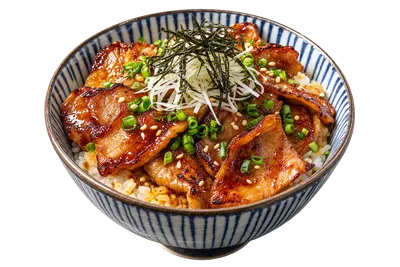
Gyudon
In German: Rindfleisch-Reisschale mit geriebenem Yamswurzel · In English: Beef bowl
For 2 servings · US units
Thinly sliced beef and onion simmered in a sweet-salty broth over warm rice
Gyudon is a bowl of rice topped with paper-thin beef and onion, simmered in soy sauce, mirin, sake and sugar — an everyday meal that's ready in half an hour. The simmering liquid soaks down into the rice, and that's the whole point: beef, onion and rice belong together here and make the meal between them. What goes on top is up to you — sliced spring onion, grated daikon, crushed yam or an egg.
Ingredients
- 5⅔ ozBeefvery thinly sliced
- 1onioncut into strips
- 14⅛ ozRicecooked, warm; Japanese short-grain rice
- 2½ tbspsoy saucefor the simmering sauce
- 1 tbspfor the simmering sauceSweet Japanese rice wine for cooking that gives sauces and glazes a mild sweetness and shine.Substitute: Sake or dry sherry with some sugar, about one teaspoon per tablespoon, comes close; sweetness and shine are roughly right, but the rounded, slightly malty depth of mirin is missing.Read more
- 1 tbspsugarfor the simmering sauce
- 2 tbspfor the simmering sauceJapanese rice wine, used in cooking mainly to round out flavours, tame fishy notes and add umami.Substitute: Dry sherry or Chinese Shaoxing wine come closest but bring their own stronger flavour; mirin is not a substitute because it is distinctly sweet.Read more
- ½ cupwaterfor the simmering sauce
- 1 tspOilfor frying
- spring onionthinly sliced, for sprinkling
- 4¼ ozcoarsely crushed or grated, as topping (optional)Caution: Only Japanese nagaimo or yamaimo may be eaten raw, other yams must be cooked, and the skin often irritates the hands during peeling and grating, so wear gloves or rinse your hands with vinegar afterwards.Japanese mountain yam (nagaimo or yamaimo), a long, pale-skinned tuber that turns into a thick, slippery paste when grated raw.Substitute: For raw tororo there is no substitute, since no other common tuber becomes as slippery when grated and can also be eaten raw. In okonomiyaki batter you can leave it out and bind with an extra egg and a little potato starch, though the pancake will be denser and less fluffy.Read more
- small dab on the yam (optional)A pungent green condiment made from the rhizome of the Japanese wasabi plant, usually served as a paste with sushi and sashimi.Substitute: Freshly grated horseradish with a little hot mustard matches the nose-clearing heat, but it is harsher and lacks the sweet, herbal note of real wasabi.Read more
- 1 clovegarlicgrated, into the simmering sauce (optional)
- 8¾ ozfinely grated, as topping (optional)A large, mild white radish from East Asia, crisp and juicy raw, soft and broth-absorbing when cooked.Substitute: White radish is a good substitute, slightly sharper when raw; for simmered dishes and soups, turnip also works, though it is sweeter and less juicy.Read more
- 3½ ozroot end trimmed, separated (optional)Small beech mushrooms with firm stems and round caps that grow in clusters, brown or white, with a mild, nutty flavour and a slight crunch.Substitute: Oyster mushrooms torn into strips come closest in firm bite and mild flavour; button mushrooms also work but turn softer and taste less nutty.Read more
- 1carrotcut into fine strips (optional)
- 2Eggraw or very soft, on top (optional)
- ⅛ ozfor the simmering sauce (optional)Instant stock made from dried bonito flakes, usually with kombu, salt and flavour enhancers, sold as granules or powder; dissolved in hot water it becomes Japan's basic stock.Substitute: The best replacement is homemade dashi from kombu and bonito flakes, which tastes more delicate and less salty, so you will need to season more. Kombu alone, or kombu with dried shiitake, makes a fish-free stock but lacks the smoky note. Supermarket chicken or vegetable stock is not a real substitute: the dish stays edible but no longer tastes Japanese.Read more
Method
- Cook the riceWash and cook the rice so it's warm and waiting by the time the beef is done.
- Prep vegetables and toppingCut the onion into strips and slice the spring onion into fine rings. If you want a topping, grate the daikon finely now, or crush the yam coarsely or grate it.
- Brown the beefHeat the vegetable oil in a pan and fry the thinly sliced beef until the colour changes, separating the slices with chopsticks or a spoon as you go.
- Soften the onionAdd the onion strips and cook along until they soften.
- Bring the sauce to a boilPour in the soy sauce, mirin, sugar, sake and water, bring everything to a boil and skim off the foam.
- Cover and simmerCover and simmer over low heat for 5 to 10 minutes, until the onion is translucent and the broth has taken on flavour.
- Assemble the bowlsFill two bowls with the warm rice and spoon the beef and onion over it, along with plenty of the simmering liquid.
- Add topping and garnishFinish with your topping: crushed yam with a small dab of wasabi, a mound of grated daikon, or an egg. Scatter the spring onion rings over the top at the end.
Tips and variations
Instead of a topping, you can put vegetables in the pan with the beef: shimeji mushrooms and fine carrot strips simmer along with the meat, and in that case the sauce is made without the water, from just the soy sauce, mirin, sugar and sake. For a lighter bowl, pile plenty of finely grated daikon over the meat. If you'd rather keep it simple, skip the frying and put the beef and onion straight into the cold seasoned broth with a little grated garlic, then cook everything for 10 minutes. Another version blanches the beef briefly in water first, turns it in the sauce afterwards and stretches the broth with dashi. An egg on top works well, either raw or, if you like it softly set, left in its shell in hot water for 5 to 7 minutes first. Serve the bowls right away, while the rice is hot and still drinking up the broth.
Allergens
Contains: Cereals containing gluten, Soybeans
May contain if you use the optional ingredients: Eggs, Fish
Not every ingredient in this recipe has been checked, so nothing is promised as free from.
These notes follow from this recipe's ingredient list. Ready-made products and brands may contain further allergens — please check the packaging yourself.
Something not right?
This recipe was put together from independent sources and checked before publishing. Even so, a mistake can slip through — an amount that does not add up, a step that does not work as written. If you spot something, write to us: we will look into it and put it right.