50 min · Fish · Main course · For confident cooks
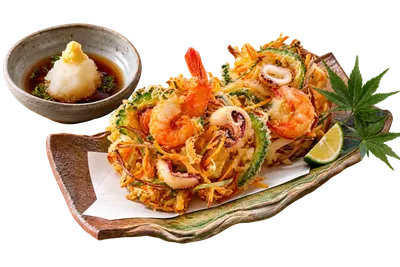
Tempura Moriawase
In German: Gemischtes Tempura · In English: Mixed Tempura
For 4 servings · US units
Vegetables and shrimp in a thin, crisp coating with warm dashi dipping sauce
Tempura comes down to two things: a batter that is barely stirred, and oil held at the right temperature. Eggplant, kabocha, shishito peppers and shrimp end up under a thin, crackling shell while the vegetables stay juicy inside. With a warm dipping sauce of dashi, soy sauce and mirin, it makes a light summer meal — best eaten straight from the pot.
Ingredients
- 4¼ ozWheat flourfor the batter, plus a little for dusting the ingredients
- 2 tbspmakes the coating crisper (optional)Fine white starch powder from potatoes, used in Japan as katakuriko for thickening and coating.Substitute: Tapioca starch comes closest. Cornstarch also thickens, but gives cloudier, less glossy sauces and fried coatings that are less crisp.Read more
- 1Eggbeaten, measured together with the ice water
- ⅔ cupwaterice-cold, for the batter
- 1 pinchsaltinto the batter
- 2 tbsppart of the liquid for the batter (optional)Japanese rice wine, used in cooking mainly to round out flavours, tame fishy notes and add umami.Substitute: Dry sherry or Chinese Shaoxing wine come closest but bring their own stronger flavour; mirin is not a substitute because it is distinctly sweet.Read more
- 2 tspalternative to egg, keeps the coating light (optional)A mild, faintly sweet vinegar made from rice, much gentler than wine vinegar.Substitute: Light cider vinegar or white wine vinegar, thinned with a little water and rounded off with a pinch of sugar, comes close. It tastes slightly fruitier and sharper, and the difference shows most in sushi rice and delicate dressings.Read more
- 4¼ cupsFrying oilat least 3 cm deep in the pot
- 2eggplantsliced, briefly soaked in water and patted dry
- 9Shishito pepperslit lengthwise so the oil does not spatter
- 10½ ozKabocha squashthinly sliced, pre-cooked if desired
- 5¼ ozShrimppeeled, deveined, dusted with flour before frying
- 1 bunchcut into 2–3 cm pieces, for the kakiage (optional)Japanese wild parsley with three-part leaves and long, tender stems, fresh and slightly bitter, somewhere between parsley, celery and angelica.Substitute: Flat-leaf parsley with a little celery leaf comes closest in flavour, but tastes coarser and grassier; the cool, slightly resinous note and the tender stems are missing. There is no true equivalent, so use it sparingly so the parsley does not dominate.Read more
- 10finely shredded into the batter or laid on fish fillets (optional)Aromatic leaves of a Japanese herb in the mint family, fresh and spicy, somewhere between mint, basil and anise.Substitute: There is no true substitute, because the aroma is unique. A mix of fresh mint and basil captures the freshness but not the spicy, anise-like note; Korean perilla leaves come closer but taste coarser and more sesame-like, and are tougher in texture.Read more
- ¾ cupbase for the dipping sauceJapan's basic stock, usually steeped from kombu seaweed and dried bonito flakes: clear, lightly smoky, deeply savoury.Substitute: The closest stand-in is instant dashi in granules or sachets; it is usually saltier and a little flatter, so go easy on further seasoning. For a vegetarian version, soak kombu and dried shiitake in cold water. Chicken or vegetable stock is not a good substitute: it brings its own heavier flavour, and the dish no longer tastes Japanese.Read more
- 3 tbspsoy saucefor the dipping sauce
- 2 tbspfor the dipping sauceSweet Japanese rice wine for cooking that gives sauces and glazes a mild sweetness and shine.Substitute: Sake or dry sherry with some sugar, about one teaspoon per tablespoon, comes close; sweetness and shine are roughly right, but the rounded, slightly malty depth of mirin is missing.Read more
Method
- Bring the dashi, soy sauce and mirin to a brief boil in a small pot, then take it off the heat and set the dipping sauce aside; it should still be warm when you serve.
- Slice the eggplant, let the slices sit in water for a few minutes, then pat them thoroughly dry. Slit the shishito peppers lengthwise so the oil does not spatter. Cut the kabocha into thin slices, or pre-cook it.
- Peel and devein the shrimp, then score them along the belly so they stay straight; keep about a third of the shrimp back for the kakiage. Cut the mitsuba, if using, into 2–3 cm lengths. Lay everything out within reach so you can work quickly later on.
- Beat the egg and stir it together with the ice-cold water. Sift the wheat flour with the salt and, if using, the potato starch over the top and fold it through only roughly — streaks of dry flour should still be visible, so do not stir it smooth. If you like, replace part of the liquid with sake.
- Heat the frying oil at least 3 cm deep in a pot and check the temperature: a drop of batter should rise back to the surface promptly.
- Dust the ingredients lightly with flour, pull them through the batter and fry them in order of rising temperature — shishito first, then eggplant and kabocha, the remaining shrimp last. Flour the shrimp only just before they go into the oil. Fry just a few pieces at a time.
- For the kakiage, stir the shrimp you set aside and the mitsuba into the leftover batter, slide bite-sized portions into the oil, turn them once and loosen the centre a little, frying until pale golden brown.
- Let everything drain briefly against the rim of the pot, blot it on kitchen paper and serve at once with the warm dipping sauce.
Tips and variations
For an egg-free batter, mix flour, starch and salt with water and rice vinegar — halve the vinegar for ingredients that fry only briefly. For a particularly light coating, stir a batter of rice flour with ice-cold sparkling water; a version with a raising agent and egg yolk only rests in the fridge for 30–60 minutes afterwards. White-fleshed fish (kisu) works in place of the shrimp, fried with a shiso leaf laid on top, and finely shredded shiso can also go into the batter. Kabocha can be pre-cooked in the microwave, mashed and shaped into little parcels dipped only halfway into the batter, while slices of bell pepper and chilli make an extra kakiage. Quail in tempura batter is served with a noodle soup made from the cooking liquid. For a sweet version, fry sugared plums in a rice-flour batter with egg and sugar and serve them with a quark cream.
Allergens
Contains: Eggs, Fish, Cereals containing gluten, Crustaceans, Soybeans
Not every ingredient in this recipe has been checked, so nothing is promised as free from.
These notes follow from this recipe's ingredient list. Ready-made products and brands may contain further allergens — please check the packaging yourself.
Something not right?
This recipe was put together from independent sources and checked before publishing. Even so, a mistake can slip through — an amount that does not add up, a step that does not work as written. If you spot something, write to us: we will look into it and put it right.