90 min · Vegetarian · Main course · For confident cooks
Inarizushi
In English: Inari sushi
For 4 servings · US units
Sweet-savoury simmered tofu pouches filled with sesame sushi rice
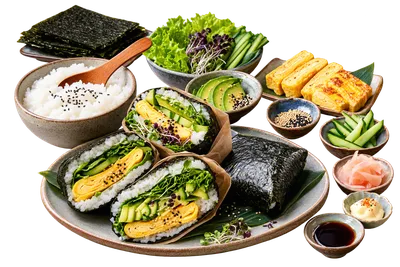
Inarizushi is sushi without a rolling mat: fried tofu pouches are simmered soft in dashi, soy sauce and mirin until they have soaked up the sweet-savoury broth, then packed with vinegared rice. They are eaten at room temperature and with your fingers, which is exactly why they are a bento box standard all year round. Count on about 90 minutes in all — and if you simmer the pouches the day before, there is far less to do on the day you serve them.
Ingredients
- 15¾ ozuncooked, washed and drained several timesJapanese short-grain rice, often sold as sushi rice, which cooks up soft and slightly sticky.Substitute: Californian medium-grain rice comes very close and is often cheaper. Pudding rice is also short-grain but turns too soft and mushy, and risotto rice keeps a firmer core; both are only a stopgap, while long-grain rice such as basmati or jasmine does not stick and will not work.Read more
- 6Fried tofu pouches (aburaage)halved they make 12 pouches; alternatively 12 ready-seasoned inari age
- ¼ cupunseasoned, for the sushi vinegarA mild, faintly sweet vinegar made from rice, much gentler than wine vinegar.Substitute: Light cider vinegar or white wine vinegar, thinned with a little water and rounded off with a pinch of sugar, comes close. It tastes slightly fruitier and sharper, and the difference shows most in sushi rice and delicate dressings.Read more
- 2⅛ ozsugarabout half for the sushi vinegar, half for the pouch simmering liquid
- 1½ tspsaltfor the sushi vinegar
- 2 tbspsesame seedstoasted, folded into the rice
- 2 tbspsoy saucefor the pouch simmering liquid
- 1⅔ cupssimmering liquid for the pouches; one source uses plain waterJapan's basic stock, usually steeped from kombu seaweed and dried bonito flakes: clear, lightly smoky, deeply savoury.Substitute: The closest stand-in is instant dashi in granules or sachets; it is usually saltier and a little flatter, so go easy on further seasoning. For a vegetarian version, soak kombu and dried shiitake in cold water. Chicken or vegetable stock is not a good substitute: it brings its own heavier flavour, and the dish no longer tastes Japanese.Read more
- 1½ tbspfor the simmering liquidSweet Japanese rice wine for cooking that gives sauces and glazes a mild sweetness and shine.Substitute: Sake or dry sherry with some sugar, about one teaspoon per tablespoon, comes close; sweetness and shine are roughly right, but the rounded, slightly malty depth of mirin is missing.Read more
- 2 tbspfor the simmering liquid or the rice cooking waterJapanese rice wine, used in cooking mainly to round out flavours, tame fishy notes and add umami.Substitute: Dry sherry or Chinese Shaoxing wine come closest but bring their own stronger flavour; mirin is not a substitute because it is distinctly sweet.Read more
- ⅛ ozcooked with the rice for aroma (optional)Caution: Kombu is very high in iodine, so it is best used mainly for making stock rather than eaten in large amounts, especially by people with thyroid conditions.Dried kelp, a brown seaweed sold in stiff, dark green sheets; the foundation of the Japanese stock dashi.Substitute: There is no true substitute. A pinch of MSG supplies the savouriness but not the taste of the sea or the depth; instant dashi granules come close in flavour but usually contain fish, which rules them out for vegetarian dishes.Read more
Method
- Wash the rice in a bowl with cold water, pouring off the cloudy water each time, until it stays clear. Drain well.
- Put the rice in a pot with an equal volume of water, add the kombu if you like, bring to the boil covered and cook over low heat. Take the pot off the heat and let the rice steam, still covered, for about 10 minutes. Lift out and discard the kombu before fluffing the rice.
- For the sushi vinegar, stir together the rice vinegar, half of the sugar and the salt, and warm gently until the sugar and salt have dissolved.
- Cut the aburaage in half, pour boiling water over them or boil them briefly to draw out the frying oil, then rinse and squeeze them out carefully. Open each half at the cut edge into a pouch, working gently so it does not tear.
- Lay the pouches in a wide, shallow pot with the dashi, soy sauce, mirin, sake and the remaining sugar, cover and simmer over medium heat until they have absorbed almost all of the liquid. Let them cool in the broth and steep, ideally overnight.
- Tip the hot rice into a shallow bowl, pour over the vinegar mixture and fold it in with cutting strokes of a spatula, fanning as you go, until the rice is glossy and at body temperature. Fold in the toasted sesame seeds.
- Divide the rice and shape it with damp hands into loose, oblong balls.
- Squeeze each tofu pouch lightly, open it up and fill it with a rice ball, pushing the rice right into the corners. Fold the edges in or overlap them, and set the pouches seam side down.
- Serve at room temperature.
Tips and variations
Ready-seasoned inari pouches from the shop save you the simmering altogether. Instead of plain rice you can use a filling of asparagus and courgette fried in butter and seasoned with soy sauce and pepper, with the asparagus tips laid on top. The open version looks good too: leave the pouch unclosed and garnish it with salmon roe, prawns, strips of omelette, cucumber or salmon. The sugar in both the simmering broth and the sushi vinegar can be replaced with a calorie-free sweetener, and if you want to make your own aburaage, deep-fry thinly sliced tofu twice, first at 110–120 °C, then at 180–200 °C. To serve, add shiso leaves and sushi ginger to the plate, with sweet chilli sauce alongside.
Allergens
Contains: Fish, Cereals containing gluten, Sesame, Soybeans
Not every ingredient in this recipe has been checked, so nothing is promised as free from.
These notes follow from this recipe's ingredient list. Ready-made products and brands may contain further allergens — please check the packaging yourself.
Something not right?
This recipe was put together from independent sources and checked before publishing. Even so, a mistake can slip through — an amount that does not add up, a step that does not work as written. If you spot something, write to us: we will look into it and put it right.