Japan · 35 min · Fish · Main course · For confident cooks
Buri no Shioyaki
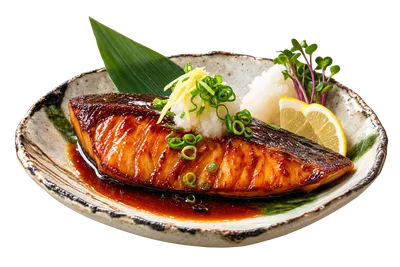
In German: Gesalzene gebratene Gelbschwanzmakrele mit Ingwer · In English: Salt-grilled yellowtail
For 2 servings · US units
Salt-grilled yellowtail with grated daikon and citrus
Shioyaki means salt and grill, and a good piece of fish doesn't need more than that. Yellowtail is at its richest in winter, and the salt crisps the skin while keeping the flesh juicy underneath. Alongside comes a mound of finely grated daikon with a few drops of soy sauce as a palate cleanser, plus citrus wedges to squeeze over.
Ingredients
- 2fillet pieces or collars (kama)Caution: For raw use, buy only fish sold explicitly for raw consumption that has been frozen as required to kill parasites.Japanese sea fish of the jack family, known as hamachi or buri, with firm, rich, pale flesh and a mild, buttery flavour.Substitute: The closest match is the related yellowtail kingfish, which is slightly leaner and less buttery. For raw dishes, sashimi-grade tuna or salmon will do, though tuna is leaner and salmon has a distinctly different flavour; for braised or pan-fried dishes, mackerel works but tastes stronger and fishier.Read more
- saltcoarse sea salt, sprinkled from a height on both sides; about 1.5–2 % of the fish weight
- 1 tbspto rinse or pre-season the fish, reduces fishy smell (optional)Japanese rice wine, used in cooking mainly to round out flavours, tame fishy notes and add umami.Substitute: Dry sherry or Chinese Shaoxing wine come closest but bring their own stronger flavour; mirin is not a substitute because it is distinctly sweet.Read more
- 7 ozfinely grated, served alongsideA large, mild white radish from East Asia, crisp and juicy raw, soft and broth-absorbing when cooked.Substitute: White radish is a good substitute, slightly sharper when raw; for simmered dishes and soups, turnip also works, though it is sweeter and less juicy.Read more
- 1lemonin wedges for squeezing; sudachi or yuzu as alternative
- 1 tspsoy saucea few drops over the grated radish (optional)
- 1½ tbspgingerfinely grated, for the ginger-vinegar sauce (optional)
- 1½ tbspmixed with the grated ginger (optional)A mild, faintly sweet vinegar made from rice, much gentler than wine vinegar.Substitute: Light cider vinegar or white wine vinegar, thinned with a little water and rounded off with a pinch of sugar, comes close. It tastes slightly fruitier and sharper, and the difference shows most in sushi rice and delicate dressings.Read more
- 1spring onioncut into 3–4 cm pieces, cooked alongside (optional)
- 1 tbspOilfor the pan or to grease the grill rack (optional)
Method
- Clean and dry the fishRinse the yellowtail pieces under cold water, remove any traces of blood, and pat them thoroughly dry with kitchen paper — only a dry surface will brown properly.
- Score the skinScore the skin side once or twice with a shallow cut so the pieces don't curl as they cook.
- Salt the fishSprinkle coarse sea salt evenly over both sides from a height of about 30 cm; if you like, moisten the fish with sake first. Reckon on roughly 1.5 to 2 percent of the weight of the fish.
- Rest and blot dryLet the fish rest for 10 to 30 minutes, then blot away the liquid that has been drawn out.
- Prepare the garnishesMeanwhile, grate the daikon finely and let it drain a little, and cut the lemon into wedges. For the optional condiment, stir the grated ginger together with the rice vinegar. If you like, cut the Japanese leek into 3–4 cm pieces.
- Preheat the grill or panHeat the grill or a pan to medium and brush the rack or pan lightly with vegetable oil.
- Cook the fishLay the fish on and brown the first side for 5 to 7 minutes. Turn it and cook for another 3 to 9 minutes, until the thickest part is done through and the flesh flakes easily. If you like, cook the pieces of Japanese leek alongside.
- Plate and serveServe the fish with the grated daikon, add a few drops of soy sauce to the radish, set the lemon wedges beside it, and spoon over a little of the ginger-vinegar mixture if you like.
Tips and variations
Instead of fillet pieces you can grill the collars (kama): salt the skin heavily and let it go almost black, since it isn't eaten. Without a fish grill, a pan with oil and a lid works well; if you prefer something sweeter, glaze the fish with soy sauce, mirin, sake and sugar (teriyaki) rather than salting it. You can also pre-season with kombu dashi powder and sake before salting. Classically, sudachi or yuzu is squeezed over the fish, with lemon as the good stand-in. If the grated ginger is too sharp, mix it into the daikon. The same treatment suits mackerel, sardine or Pacific saury.
Allergens
May contain if you use the optional ingredients: Cereals containing gluten, Soybeans
Not every ingredient in this recipe has been checked, so nothing is promised as free from.
These notes follow from this recipe's ingredient list. Ready-made products and brands may contain further allergens — please check the packaging yourself.
Something not right?
This recipe was put together from independent sources and checked before publishing. Even so, a mistake can slip through — an amount that does not add up, a step that does not work as written. If you spot something, write to us: we will look into it and put it right.